/ Case Study
Zero Defects at the Super Bowl — 150,000 Users, 7 Terabytes, One Network.
/ The Challenge
One venue. The most demanding wireless environment in America.
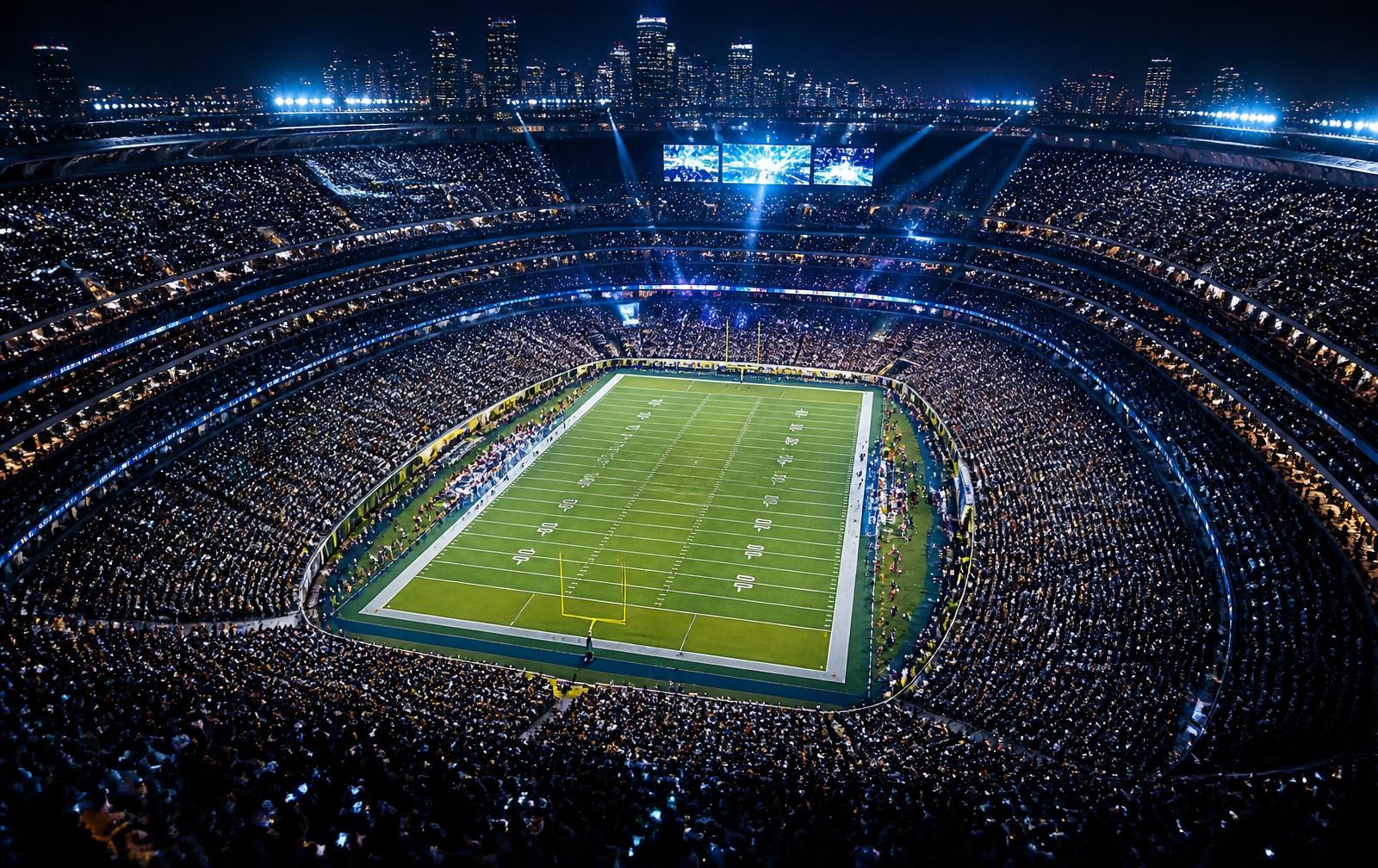
The Super Bowl is the most demanding wireless environment in America. 150,000+ fans, media, and staff converge on one venue — and in the moments after a touchdown, tens of thousands of devices transmit simultaneously.
There are no maintenance windows, no second chances, and every carrier (AT&T, Verizon, T-Mobile, Sprint) must perform flawlessly on shared infrastructure. A visible failure becomes a national story.
/ The Approach
Designed for the touchdown moment.
As the lead architect on the shared wireless infrastructure, our founder's team:
- 01
Modeled peak simultaneous demand, not average load
Designed the distributed antenna system (DAS) for the touchdown moment, when usage spikes 10x in seconds.
- 02
Coordinated four major carriers onto shared neutral-host infrastructure
Aligned competing technical requirements from AT&T, Verizon, T-Mobile, and Sprint into a single validated design.
- 03
Applied CQI analytics and CRAN architecture
Proven at venues like the LA Coliseum — maximizing per-user throughput at extreme density.
- 04
Ran full pre-event validation
Walk testing, interference sweeps, and failover verification — so game day held zero unknowns.
/ The Result
A perfect game-day scorecard.
- 150,000+ concurrent users served before, during, and after the game
- 7 terabytes of data delivered across the event window
- 100% reliability — zero defects, zero outages
- Recognized with Crown Castle's Crowning Achievement Award
/ The Takeaway
High-density wireless is a different engineering discipline.
High-density wireless isn't enterprise Wi-Fi with more access points. Whether your venue holds 1,500 or 150,000, designing for the peak moment is what separates networks that survive from networks that make headlines.
Facing a high-density challenge?
Book a scoping call and talk to the architect directly.